The 8th session of the Urban Dabali series, titled “Air Pollution Beyond the Visible: Dioxins, Waste Burning and Public Health,” was held on 11 September 2026 at Kathmandu University School of Management, Balkumari, Lalitpur. Jointly organized by the Centre for Integrated Urban Development (CIUD), Helvetas Nepal, and Nepal Technology Innovation Center (NTIC), the session brought together researchers, scientists, academics, professionals, and other stakeholders to discuss less visible but potentially hazardous forms of air pollution, particularly dioxins and bioaerosols. The key presenter was Prof. Dr. Bim Prasad Shrestha, while the panel included Dr. Rabindra Dhakal, Mr. Newton Jha, Prof. Dr. Panmanas Sirisomboon, and Prof. Dr. Anjana Singh.
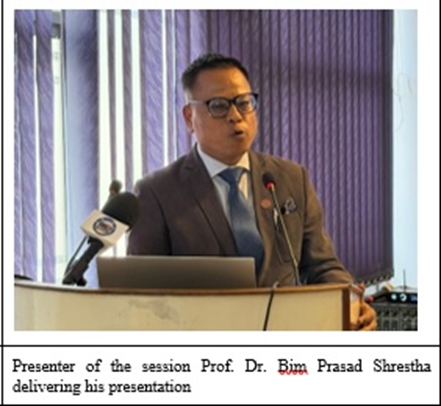
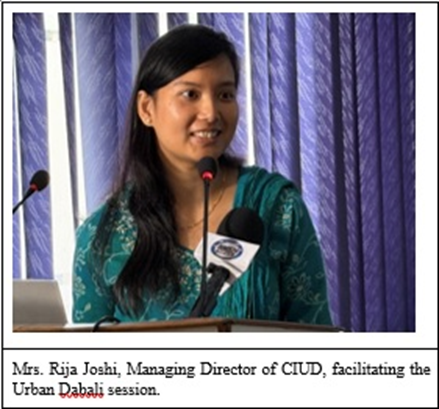
The session began with opening remarks from Ms. Rija Joshi, Executive Director of CIUD. Prof. Dr. Shrestha, in his presentation, highlighted that air pollution should not be assessed only by commonly monitored pollutants such as PM2.5 and PM10, but also by identifying other pollutants that are actually present in the air. He explained about dioxins which are generally unintended by-products formed during certain combustions and industrial processes rather than intentionally produced chemicals often termed as persistent organic pollutants (POPs). These occur at very low concentrations but can have high toxicity and persistence due to which they require a different monitoring and governance approach. Mr. Shrestha informed that Nepal had even signed the Stockholm Convention in the year 2007 as a commitment to study and monitor the dioxins present in the surrounding. However, it has not been able to achieve this commitment and therefore, his team at NTIC are working actively with the joint collaboration of experts from Thailand to develop a machine to sensor these dioxins.
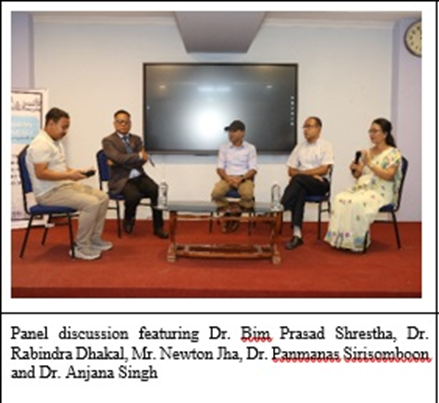
The presentation and panel discussion further emphasized that air pollution in Nepal has both local and transboundary dimensions. Pollution transported across the Hindu Kush Himalayan region requires stronger regional cooperation, institutional communication, and data sharing. The panel also discussed the relationship between inadequate waste management and its contribution to dioxin formation. In the absence of adequate waste management and disposal facilities, waste burning remains a concern, particularly because combustion at approximately 200–300°C can facilitate dioxin formation. While the exact level of dioxin generated through such practices remains uncertain, the discussion highlighted the need to minimize open burning and increase public awareness of its potential health impacts. Another important aspect of the discussion was bio aerosols, including bacteria, fungi, viruses, and pollen that may be associated with suspended particulate matter. The panel highlighted their potential links to respiratory, cardiovascular, allergic, and other health risks and emphasized the need for improved monitoring and health-risk assessment.
The interactive discussion reinforced the importance of connecting research with policy and implementation. The session highlighted the need for source-specific regulations, stronger monitoring and laboratory capacity, coordinated institutional mechanisms, public awareness, and integration of dioxin-related concerns into environmental and health policies. Participants also emphasized the importance of data sharing to address transboundary pollution.
In nutshell, the session underscored that addressing air pollution requires looking beyond what is immediately visible or routinely measured. Reducing waste burning, strengthening dioxin monitoring and research, improving waste management, increasing public awareness, and fostering coordination among government, academic, research, and community institutions were identified as important steps toward protecting public health and achieving more comprehensive air-quality management in Nepal.