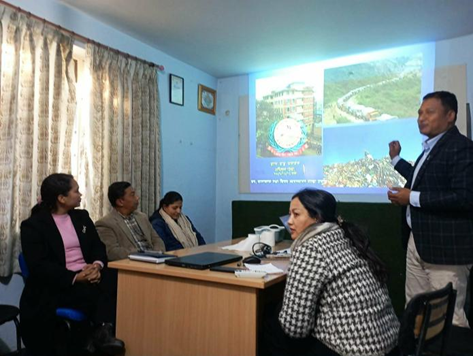
The Urban Dabali Program on Plastic Circular Economy (PCE) was organized by the Center for Urban and Infrastructure Development (CIUD) on 30 January 2026 at the CIUD Office Hall, Gusingal. The program aimed to create a platform for knowledge sharing and collaboration on sustainable plastic waste management in urban areas. Yash Man Karmacharya, Program Manager at CIUD, welcomed the participants, while Rija Joshi, Executive Director of CIUD, highlighted the importance of continuing the Urban Dabali platform as a regular forum for discussing innovative urban solutions. She noted that CIUD planned to organize the program monthly from 2026, with a focus on sharing experiences, addressing public perceptions, and exploring opportunities for collaboration.
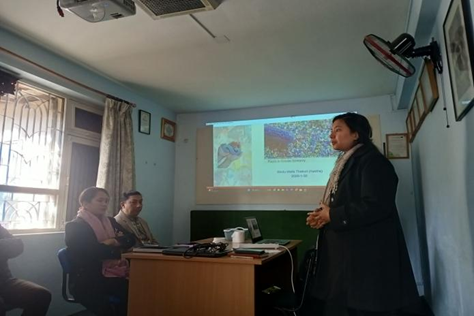
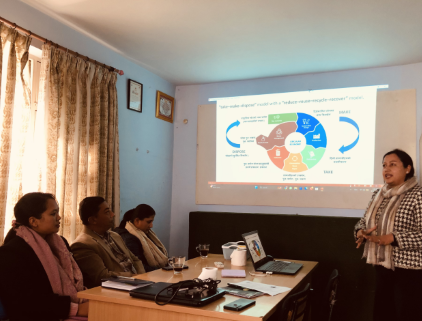
The presentation also emphasized the importance of source segregation, efficient collection systems, community participation, and behavioral change. The presenter also presented examples from Japan, Chennai, Lumbini, and Dhangadhi to demonstrate how waste can be treated as a resource and converted into useful products and energy. The discussion also focused on the need to view plastic waste not simply as a disposal problem but as a potential economic and environmental resource.
After the presentation, representatives from several municipalities shared their experiences. Kirtipur’s Plastic Upcycling and Recycling Center (PURC) shared their experience of facing challenges related to limited community participation, financing, machinery, and marketing recycled products despite their focus on plastic collection, segregation, recycling, and upcycling. It has also implemented a plastic bag ban, route-based collection, and recovery programs and its campaign “Mero Plastic, Mero Jimmebari” reportedly recovered around 75% of plastic waste during an eight-month initiative, with revenue supporting street lighting and awareness activities.
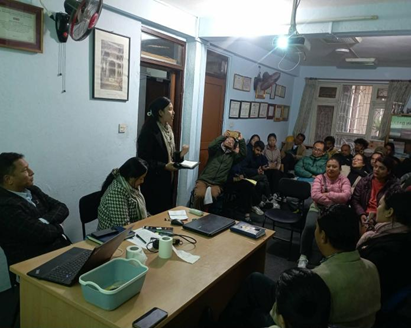
Similarly, Tokha Municipality has promoted source segregation, rooftop farming, cloth bags, and regular river-cleaning campaigns, while also recognizing the role of informal waste workers. Lalitpur Metropolitan City has introduced restrictions on plastic use, promoted traditional alternatives such as tapari, and implemented plastic purchasing and PET collection initiatives. Kathmandu Metropolitan City reported that plastic accounts for approximately 21% of municipal waste and is managed through seven dry-waste management clusters. Apart from these, other initiatives include river trash booms, rainwater harvesting, and biogas systems.
The open discussion of the session focused on citizen participation, local ownership, stronger coordination, and recognition of informal waste workers. Participants identified common challenges such as inadequate segregation, limited land for waste infrastructure, financial constraints, public resistance, and landfill management issues. Rija Joshi stressed that plastic waste management requires collective solutions, stronger policies, school-level awareness, and coordination among local, provincial, and federal governments.
In conclusion, the program strengthened understanding of the Plastic Circular Economy and provided an opportunity for municipalities and stakeholders to exchange practical experiences. The key recommendations of the session were to promote source segregation, integrate circular economy principles into municipal policies, support recycling and upcycling initiatives, encourage alternatives to single-use plastics, formally recognize informal waste workers, and strengthen awareness and behavioral-change programs.