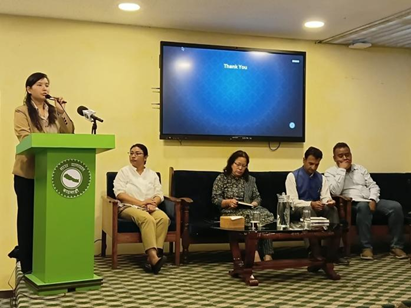
The fourth session of the Urban Dabali series, titled “Sustainable Urban Mobility for Livable Cities,” was held on 30 April 2026 at Sajha Southasia Centre, Pulchowk, Lalitpur. The session brought together policymakers, experts, practitioners, academics, and other stakeholders to discuss urban planning, mobility, public transport, and urban safety, with a focus on creating inclusive, sustainable, and people-centered cities. The program was hosted by Mr. Sudarshan Rajbhandari, with opening remarks from Mr. Niraj Acharya of Helvetas Nepal. The key presenter Mr. Sagar Onta, Transportation Expert, delivered the keynote presentation, followed by a panel discussion moderated by Ms. Rija Joshi, Executive Director of CIUD. The panel included Prof. Dr. Sangeeta Singh, Mr. Ashish Gajurel, Mr. Bhushan Tuladhar, and Ms. Nilima Thapa Shrestha.
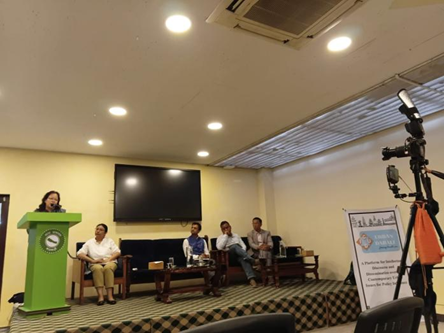
The discussion highlighted major challenges in Kathmandu Valley, including limited open spaces, inadequate public transport infrastructure, weak institutional coordination, and insufficient attention to pedestrians, cyclists, persons with disabilities, and other vulnerable users. Mr. Ashish Gajurel emphasized the need for better road policies, inclusive infrastructure, public investment, ride-sharing, no-vehicle zones, and stronger coordination among the three levels of government.
Mr. Bhushan Tuladhar further explained public transport challenges through three key dimensions; hardware, software, and institutional arrangements. He explained inadequate infrastructure, unclear responsibilities, financial limitations, safety concerns, and insufficient prioritization of public transport as major concerns. He also advocated a hybrid approach involving local governments more actively. Similarly, Ms. Nilima Thapa Shrestha emphasized the importance of public spaces, accessibility, community participation, and participatory planning. She also highlighted practices such as the Tansen model, which combines mapping, design, engineering, and public validation.Prof. Dr. Sangeeta Singh’s technical presentation emphasized shifting from vehicle-oriented planning toward people-centered mobility. She recommended prioritizing public transport, with a goal of achieving at least 50% usage, and introduced concepts such as the “Right to the City” and the “15-minute city.” Drawing from international experiences, she discussed context-specific solutions for Nepal, including cable cars, lifts in hilly areas, renewable energy, and better integration of land use and transport planning.
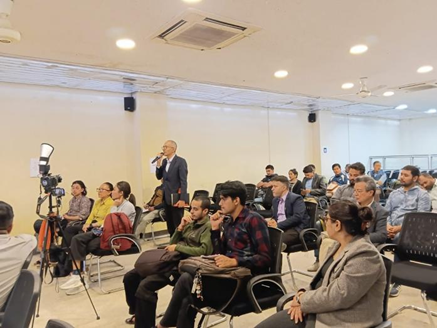
The open-floor discussion raised practical concerns including public transport fares, the high cost of electric buses, inadequate facilities at transport terminals, along with weak implementation of the formulated policies. Participants and panelists emphasized on the importance of inclusive planning, effective governance, institutional coordination, and accessibility.
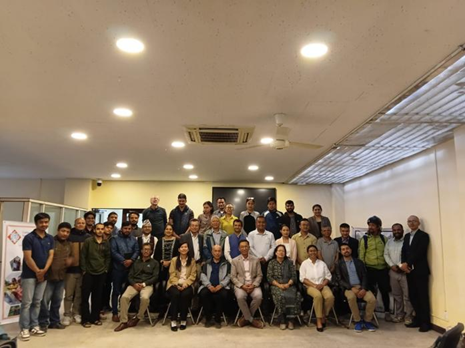
To summarize, the session strengthened understanding of urban mobility challenges and promoted sustainable, integrated, and inclusive approaches to urban development. Major recommendations from the session included improving public transport through policy reform and investment, protecting open spaces, strengthening institutional coordination, developing accessible infrastructure, encouraging participatory planning, and adopting innovative mobility solutions. The session concluded with a call to prioritize people over vehicles and build safer, more accessible, and livable cities.